Bathroom Remodeling · Custom Tile Showers
Bathroom Remodeling &Custom Tile Showersin Corpus Christi
Custom tile showers, walk-ins, garden tubs, and vanities, built by one local crew. This is our most-requested work — and it's the room where the craftsmanship either shows or doesn't.
- Licensed & Insured
- Se Habla Español
- Estimates 7 Days a Week
- Since 2013
The room where the tile work shows
A Bathroom Has Nowhere to Hide a Shortcut
A bathroom is the smallest room in the house and the least forgiving. There's no furniture to distract the eye and no long sightlines to soften a mistake. The tile lines either run straight or they don't. The grout joints either line up at the corners or they don't. And the pan either drains or it puddles.
Most of what determines whether a bathroom remodel lasts happens before a single tile goes on the wall.
Waterproofing is the job.
Underneath every tile shower is an assembly you'll never see: the pre-slope, the pan liner or bonded membrane, the curb wrap, the corners, the drain connection. Done right, it's a sealed basin that would hold water even without tile on it. Done wrong — and it's very frequently done wrong — water passes through the grout, saturates the substrate, and works its way into the framing. You find out two to five years later, when the tile starts loosening or the ceiling below shows a stain.
Slope is the other half.
A shower floor needs a consistent fall toward the drain — roughly a quarter inch per foot — and it has to be built into the mortar bed under the membrane, not just floated on top. A pan without a pre-slope traps water permanently in the assembly. In Corpus Christi's humidity, that's not a small problem.
None of this is visible in a finished-photo. It's the reason a bathroom that looks identical to another one costs more and lasts three times as long.
Juan Martinez has run MLA since 2013, and bathrooms — tile showers especially — are the work this crew gets called for most. Demo, plumbing rough-in, waterproofing, pan, tile, glass, vanity, and paint are all handled by the same people. Nobody's waiting on a tile sub who's still on another job, and nobody's tiling over somebody else's waterproofing and hoping it was done right.
“Hire these guys!!! They are amazing. Very thorough. Kind. Respectful. Good communication.”
What's Included
From a Tired Bath to a Finished One
Custom Tile Showers
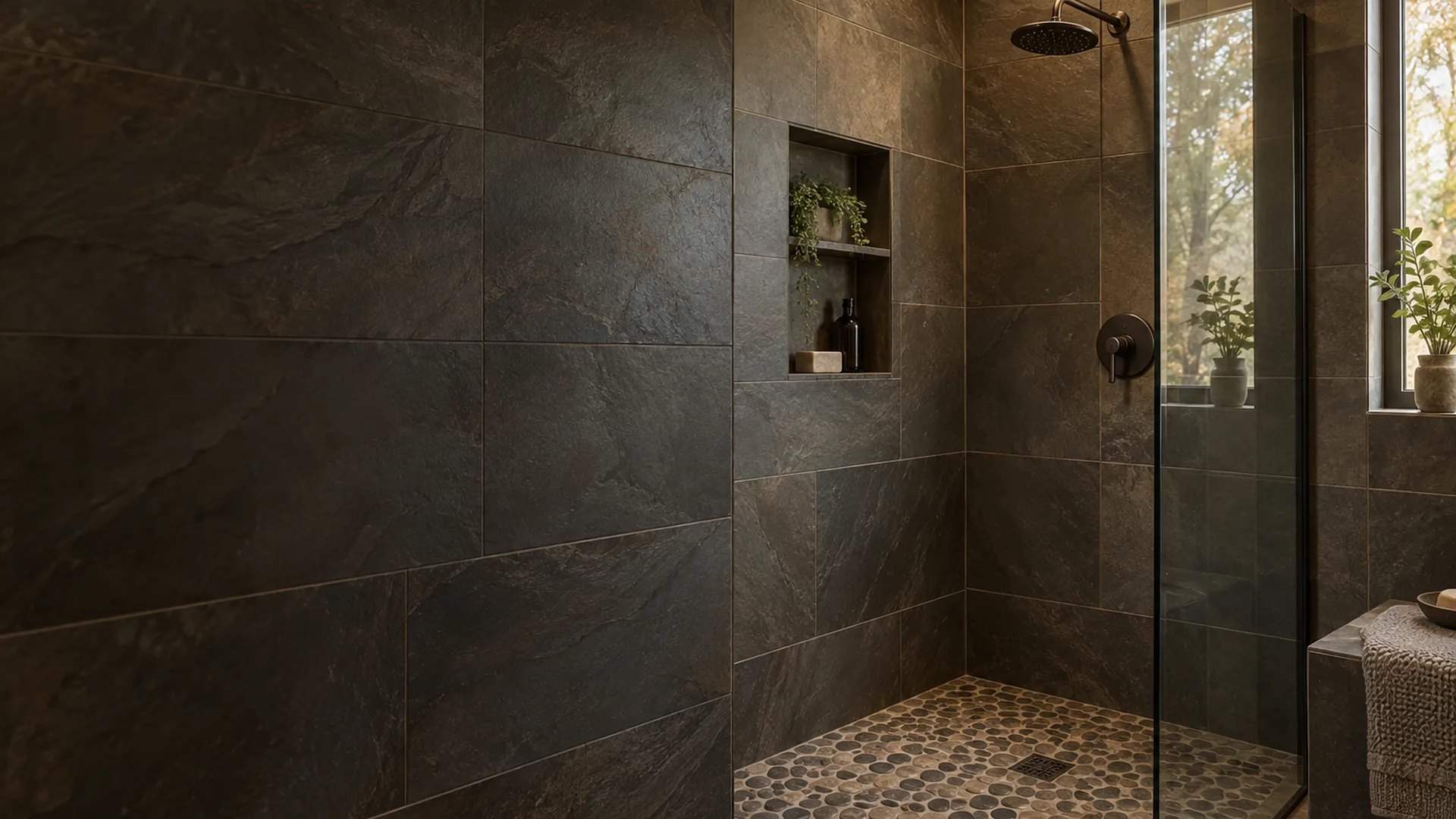
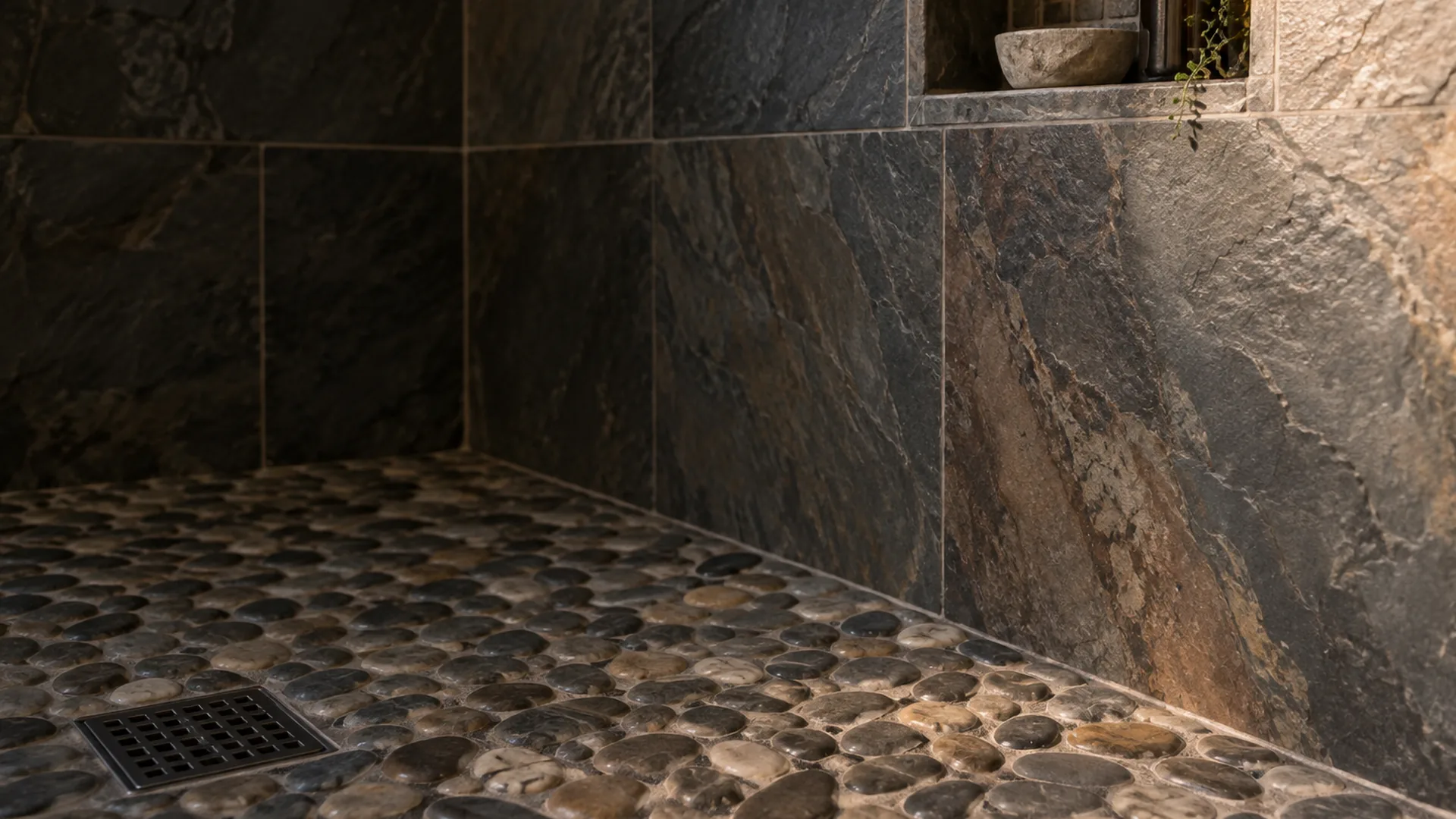
Walk-ins, corner showers, and full enclosures. Slate, travertine, subway, and mosaic. Pebble and mosaic shower pans, recessed niches sized to the tile layout, built-in benches, and frameless glass. This is the work in the gallery below, and it's what we're known for.
Tubs & Conversions
Garden tubs and jetted tubs set into custom tile or wood surrounds, standard tub replacements, and tub-to-shower conversions — one of the most requested upgrades in older Corpus Christi homes.
Vanities & Counters
New vanities, stone and quartz tops, undermount and vessel sinks, and the supply and drain work behind them. Double-vanity conversions where the wall space allows it.
Tile Floors & Walls
Floor tile, full-height wall tile, accent bands, and wainscot. Laid out so the cuts land where they should and the lines carry through from floor to wall instead of dying in a corner.
Waterproofing & Prep
Pre-slope, membrane, curb wrap, corner detailing, and cement backer. The part you never see, done to the standard that decides whether the shower is still sound in fifteen years.
Ventilation, Paint & Cleanup
Exhaust fan upgrades sized to the room — genuinely important on this coast, where humidity is the reason paint peels and mildew returns — plus paint and a cleaned site before we leave.
How It Works
Four Steps, No Guesswork
Call or Text
Tell us what's going on. We'll ask the right questions and set a time to look at it.
On-Site Estimate
We come out, measure, and give you a straight number — no vague ranges.
We Build It
One crew, start to finish. You get daily progress and a clean job site.
Final Walkthrough
We walk it together. Nothing's done until you say it's done.
Under the Tile
The Waterproofing Assembly, Layer by Layer
The part you never see is the part that decides whether the shower lasts five years or thirty. Here's what's actually under the tile, and why it matters more on this coast.
Tile and grout are not waterproof. Water passes through grout by design, and a surprising amount of moisture moves through tile and the thinset beneath it over the years. What catches that water is the assembly underneath — and whether that assembly was built right is the difference between a shower you forget about and one that fails.
The pre-slope.Under the waterproofing is a mortar bed, sloped toward the drain at roughly a quarter inch per foot. That slope is built into the bed under the membrane, not floated on top. A pan without a pre-slope traps water in the assembly permanently, and on a humid coast that water never really dries — it's how a shower rots from the inside out.
The membrane or pan liner.On top of the pre-slope goes either a pan liner (PVC or CPE sheet, folded up the curb and up the walls behind the tile) or a bonded waterproof membrane bonded to a sloped substrate. The liner has to wrap the curb, fold the corners without cutting it flat, and seal to the drain flange at the bottom. The membrane has to run the walls to the right height and lap correctly at the seams. Either system works; skipping it, or rushing it, is what doesn't.
The drain connection.The shower drain ties the membrane to the waste line, and the flange has to sit in a bed of mortar and seal to the liner so water can't get under it. A drain that's set too high or too low, or not bonded to the liner, is a slow leak waiting to happen — and it's the single most common thing we find failed in an older shower.
Curb, corners, and seams.Water runs down, so every horizontal-to-vertical corner, the curb top, and the curb-to-floor junction are where a liner fails if it wasn't wrapped right. Cement backer or foam board goes on the walls, and every seam and fastener in it gets sealed. Niches and benches are penetrations through the waterproofing, so they get their own detailing — they're not just a hole in the wall.
Why it matters more on the coast.In a dry climate, a shower that leaks a little might dry out between uses. Here, the humidity stays, the substrate stays wet, and what would be a cosmetic problem elsewhere becomes rotted framing and a stained ceiling below. An exhaust fan sized to the room — not the cheapest one that fits — matters for the same reason: it moves the humidity out instead of letting it sit.
What It Costs
Bathroom Remodels Begin at $5,000
Bathroom projects with MLA begin at $5,000. The final number comes down to the size of the room, the tile and fixtures you select, and what we find behind the walls once demo starts.
The size of the space
A hall bath and a primary suite are different jobs. More square footage means more tile, but the bigger cost driver is the complexity of the tile work — a large-format wall tile in a simple rectangle installs faster per square foot than a small mosaic wrapping a bench, a niche, and a curb.
The materials and the tile layout
Standard ceramic versus slate or travertine. A basic sloped pan versus a pebble mosaic floor. A stock vanity versus a stone-topped custom build. Frameless glass versus a framed door or a curtain. Tile selection and layout complexity together drive more of this number than any other factor.
What's behind the walls
Moving a shower, converting a tub to a walk-in, or relocating a toilet means new drain and supply work. And in bathrooms of a certain age — which describes a lot of Flour Bluff, Central City, and older Southside housing — demo frequently reveals a pan that's been leaking slowly for years, with rotted substrate or framing underneath. We look for the signs at the estimate, tell you what we find the day we find it, and price the change before we continue.
Conversions & Timeline
Tub-to-Shower Conversions, and How Long It Takes
A conversion isn't a swap — it's a rebuild of the wet area. Here's what's actually in it, and what a bathroom remodel timeline looks like on this coast.
What a conversion actually is.Taking out a tub and putting in a walk-in shower means a new curb or a curbless pan, a drain reset to the shower location (which is rarely where the tub drain was), full waterproofing from scratch, new tile, and a glass enclosure. The valve usually stays, but the shower head and controls move. It's a real rebuild of the wet area, not a drop-in replacement — which is exactly why it's worth doing with a crew that handles both the plumbing and the tile.
Walk-ins and aging in place.A walk-in or curbless shower is one of the highest-value changes in an older Coastal Bend home, especially if you're planning to stay. It's also one of the more involved, because a curbless pan means lowering the drain and sometimes the floor structure. We figure out what the floor allows at the estimate rather than mid-build.
What a bathroom timeline looks like.Demo and rough-in first, while the walls are open. Waterproofing next, with its cure time — mortar beds and membranes need to set before tile, and that's not a step to rush. Then tile, which is the labor and the time: a small mosaic with benches and niches takes longer per square foot than large-format tile in a plain rectangle. Then grout, glass, vanity, paint, and a final walk. Most bathrooms run in the range of a couple of weeks to several, set by scope and tile complexity, and you get that number with the written scope.
The cure times aren't optional. Rushing a mortar bed or a membrane is precisely how a shower fails early — the waterproofing cracks or never bonds, and the problem shows up years later as loose tile or a ceiling stain. It's the part of the schedule that protects everything you can see.
Real Showers, Real Homes
Bathroom Remodels We've Built in the Coastal Bend
Every photo here is an actual MLA bathroom in the Corpus Christi area — no stock images, no borrowed portfolios.
Bathroom Remodel Questions
Answers Before You Call
Bathroom projects with MLA begin at $5,000. The final number comes down to the size of the room, the tile and fixtures you select, and what we find behind the walls once demo starts. Tile choice and layout complexity move the number more than anything else — a pebble-floor walk-in with a bench and a niche is substantially more labor than a straightforward tub surround. Juan comes out, measures, and puts a firm price in writing before anything starts.
Yes, and it's the work we're best known for. Walk-ins, corner showers, pebble mosaic pans, recessed niches, built-in benches, diagonal-set tile, and frameless glass enclosures. Every shower in the gallery above was built by this crew — not sourced from a stock photo library.
We do these regularly, and in Corpus Christi's older housing stock it's one of the highest-value upgrades available — especially for anyone planning to stay in the house long term. A conversion typically means new pan framing, a relocated and re-set drain, full waterproofing, tile, and glass. It's a real rebuild rather than a swap, which is why it's worth having done by a crew that does the plumbing and the tile.
Most bathrooms run one to three weeks depending on scope and tile complexity. Custom tile work takes the time it takes — mortar and waterproofing membranes have cure times, and rushing them is precisely how a shower fails early. You get a realistic timeline with the written scope.
Underneath the tile is a waterproofing assembly: a sloped mortar bed, a pan liner or bonded membrane, wrapped and sealed corners and curb, and a properly connected drain. Tile and grout are not waterproof — water passes through grout by design, and the membrane underneath is what catches it. If that assembly is skipped or rushed, water reaches the substrate and the framing, and you find out years later when tile loosens or a stain appears in the ceiling below. It's invisible work, and it's the difference between a shower that lasts and one that doesn't.
Plumbing relocations and electrical changes generally do. Replacing a vanity in the same spot usually doesn't. MLA is licensed and pulls City of Corpus Christi permits where the work requires them, and handles the inspections as part of the job.
Absolutely — bring your selections or let us source them. We'll tell you honestly if something is going to be difficult to install, difficult to keep clean, or a poor fit for a wet area. Some beautiful tile is a maintenance problem in a shower, and it's better to hear that at the estimate than after it's grouted.
Usually a shower pan or wall assembly that's been leaking slowly behind the tile, or an undersized exhaust fan that never clears the humidity. The tile surface can look perfect while the substrate behind it is saturated. It's extremely common in bathrooms of a certain age on this coast, and the honest fix is a rebuild — new pan, new waterproofing, new tile — rather than a re-grout that buys a few months.
Under the tile is a waterproofing assembly: a sloped mortar bed (the pre-slope, roughly a quarter inch per foot toward the drain), a pan liner or bonded membrane on top of it that wraps the curb and the corners, a drain flange sealed to the liner, cement backer or foam board on the walls with every seam and fastener sealed, and the tile and grout on top of all of it. Tile and grout are not waterproof — water passes through grout by design, and the assembly underneath is what catches it. Built right, it's a sealed basin that would hold water without the tile. Built wrong, water reaches the substrate and the framing, and you find out years later.
In a dry climate, a shower that leaks a little can dry out between uses. Here the humidity stays, the substrate stays wet, and what would be a cosmetic problem elsewhere becomes rotted framing and a stained ceiling below. That's also why an exhaust fan sized to the room matters — it moves the humidity out instead of letting it sit. The cure times on the mortar bed and membrane aren't optional either; rushing them is precisely how a shower fails early.
No — it's a rebuild of the wet area. Taking out a tub and putting in a walk-in means a new curb (or a curbless pan with a lowered drain), a drain reset to the shower location, full waterproofing from scratch, new tile, and a glass enclosure. The valve usually stays but the shower head and controls move. It's a real rebuild, which is exactly why it's worth doing with a crew that handles both the plumbing and the tile.
Demo and rough-in first while the walls are open, then waterproofing with its cure time, then tile (the labor and the time — a small mosaic with benches and niches takes longer per square foot than large-format tile in a plain rectangle), then grout, glass, vanity, paint, and a final walk. Most bathrooms run in the range of a couple of weeks to several, set by scope and tile complexity, and you get that number with the written scope. The cure times protect everything you can see, so they're not a step to rush.
Related Services
Related Services
Local Service Areas
Where We Provide This Service
MLA Contracting delivers this service across Corpus Christi and surrounding Coastal Bend communities.

Free In-Person Estimate
Let's Build the Bathroom You Want
Call or text Juan at (361) 244-6440, or send a few details and he'll set up a time. Free, about an hour, seven days a week from 8am to 7pm.