Gas Lines · Licensed, Permitted & Inspected
Gas Line Installation& Repair inCorpus Christi
New runs, extensions, and repairs for ranges, water heaters, dryers, grills, and outdoor kitchens. Sized correctly, pressure-tested, permitted, and inspected.
Smell gas? Get out of the house first.
Don't flip any switches, don't unplug anything, and don't use your phone inside. Get everyone outside, then call your gas utility, then call us at (361) 244-6440.
- Licensed & Insured
- City Permits Pulled
- Pressure-Tested
- Se Habla Español
- 7 Days a Week
The kind of work you want on the record
Gas Is the One Trade Where “Close Enough” Isn't a Thing
A gas line is unforgiving in a particular way: the mistakes don't announce themselves.
A gas line that's undersized for the run doesn't leak. It just starves the appliance — so your new range never quite gets hot, the burners look weak, and you assume that's how it is. A fitting that's almost tight passes a casual look and leaks slowly for years.
Sizing is the part homeowners don't know to ask about.
Gas pipe diameter isn't a preference. It's calculated from the appliance's BTU demand and the total developed length of the run, counting every elbow and fitting as additional equivalent length. Run a line that works fine for a water heater fifteen feet away, then extend that same branch forty feet to an outdoor kitchen, and you've created a pressure problem for everything on it. It's arithmetic, it's in the code, and it gets skipped constantly by people working without a permit.
And there's a bonding requirement most homeowners have never heard of.
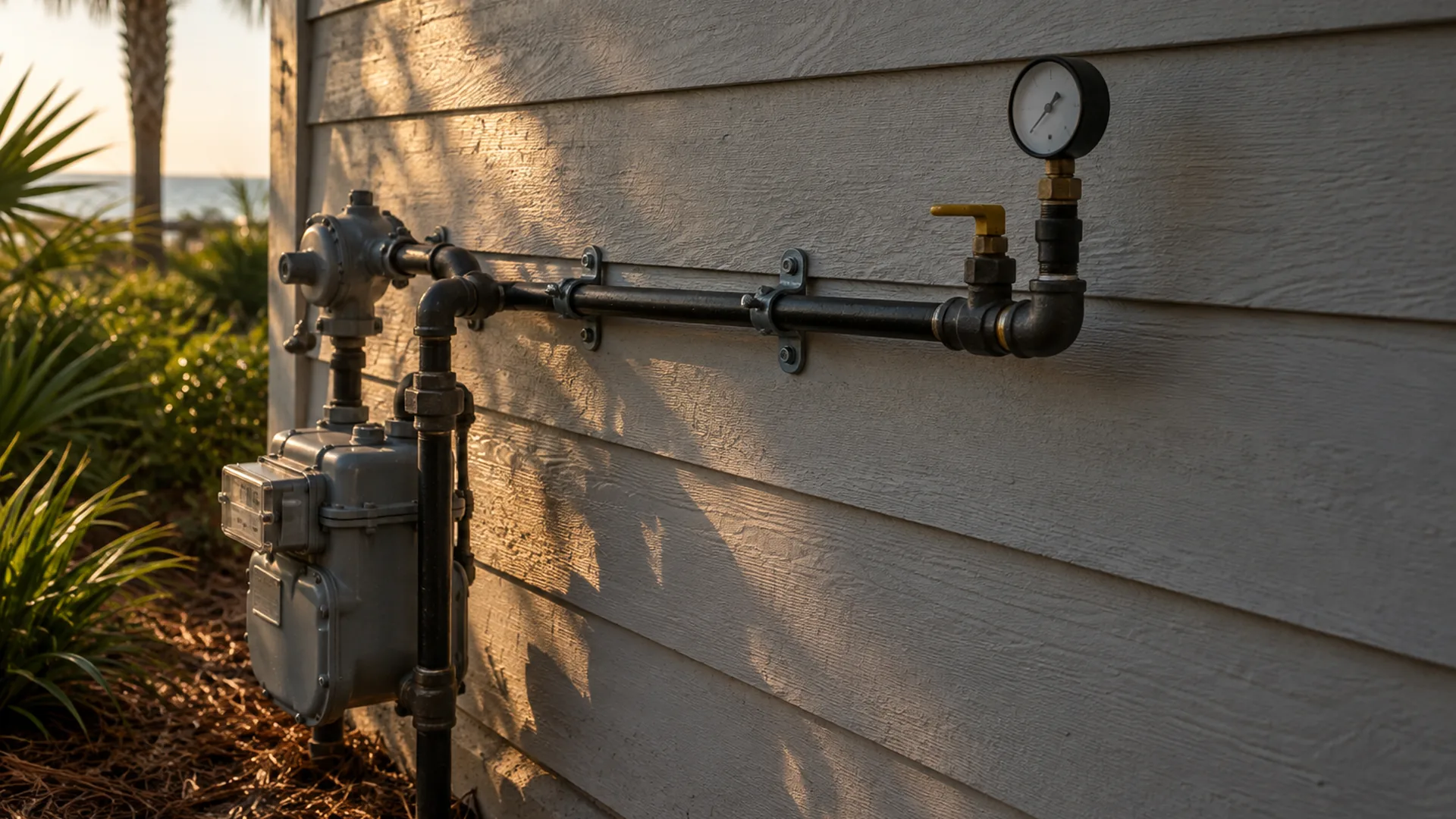
Corrugated stainless steel tubing — CSST, the flexible yellow or black jacketed line used in a lot of modern gas work — must be properly bonded to the home's electrical grounding system. Unbonded CSST has been implicated in lightning-related failures, because the tubing wall is thin enough that an electrical arc can perforate it. On a coast that gets the thunderstorm activity this one does, that isn't a technicality.
MLA pulls the City of Corpus Christi permit, pressure-tests the system before anything is connected, and gets it inspected.
That's not extra caution. It's the standard — and it's what makes the work defensible when you sell the house or file a claim.
What We Install and Repair
From the Meter to the Appliance
New Gas Line Runs
From the meter to wherever it needs to go, sized correctly for the appliance load and the developed length of the run.
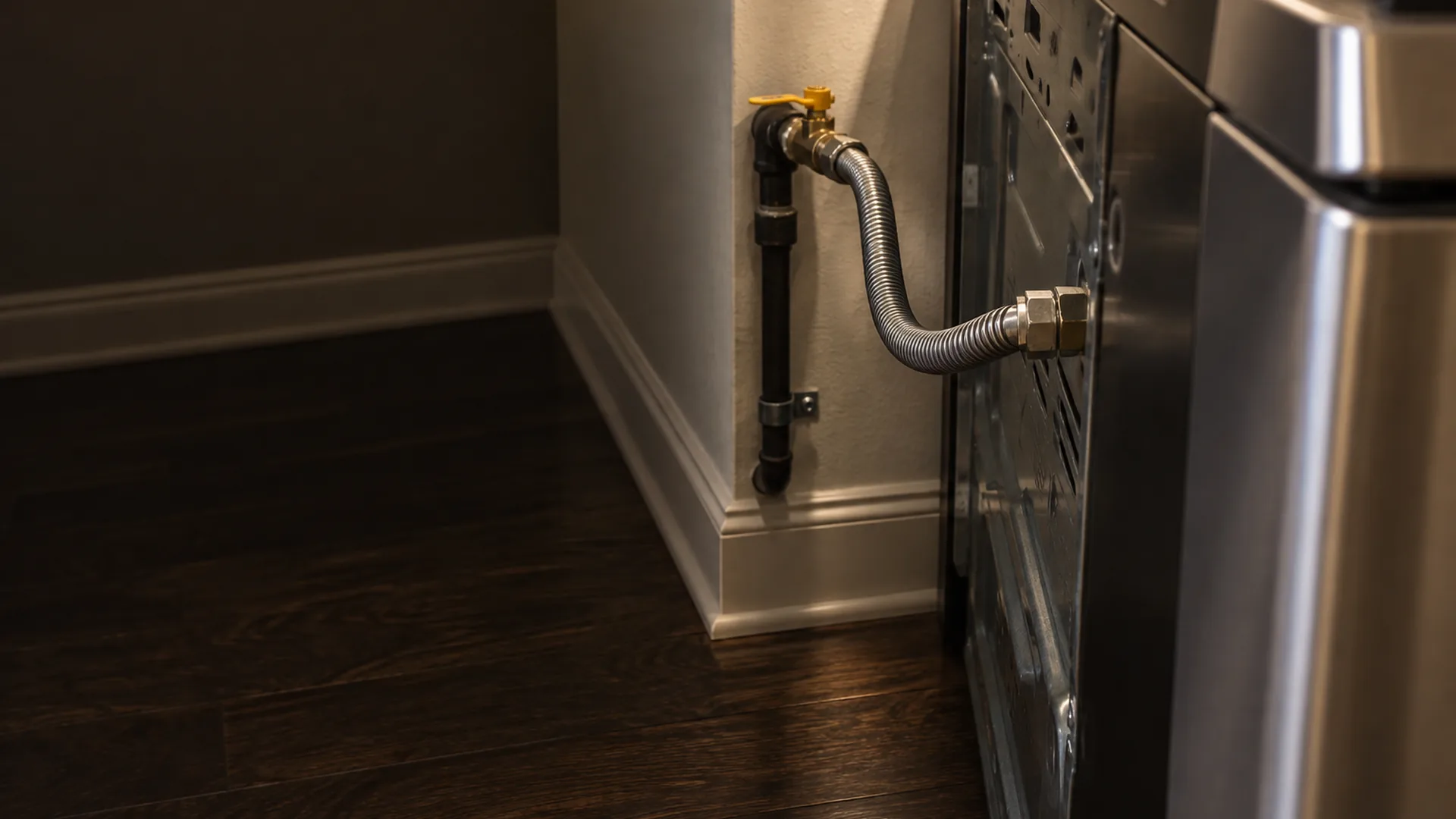
Range & Cooktop Hookups
Converting an electric kitchen to gas, or relocating a range during a remodel — including the cabinet modification and the gas line work a conversion needs.
Water Heater Lines
New installs, replacements, and conversions, tank or tankless. Tankless units draw far more BTU than a tank and frequently need a larger line than what's already there.
Dryer Gas Lines
Adding a gas dryer connection to a laundry room, including the run, the shutoff, and the connector.
Outdoor Kitchens, Grills & Fire Features
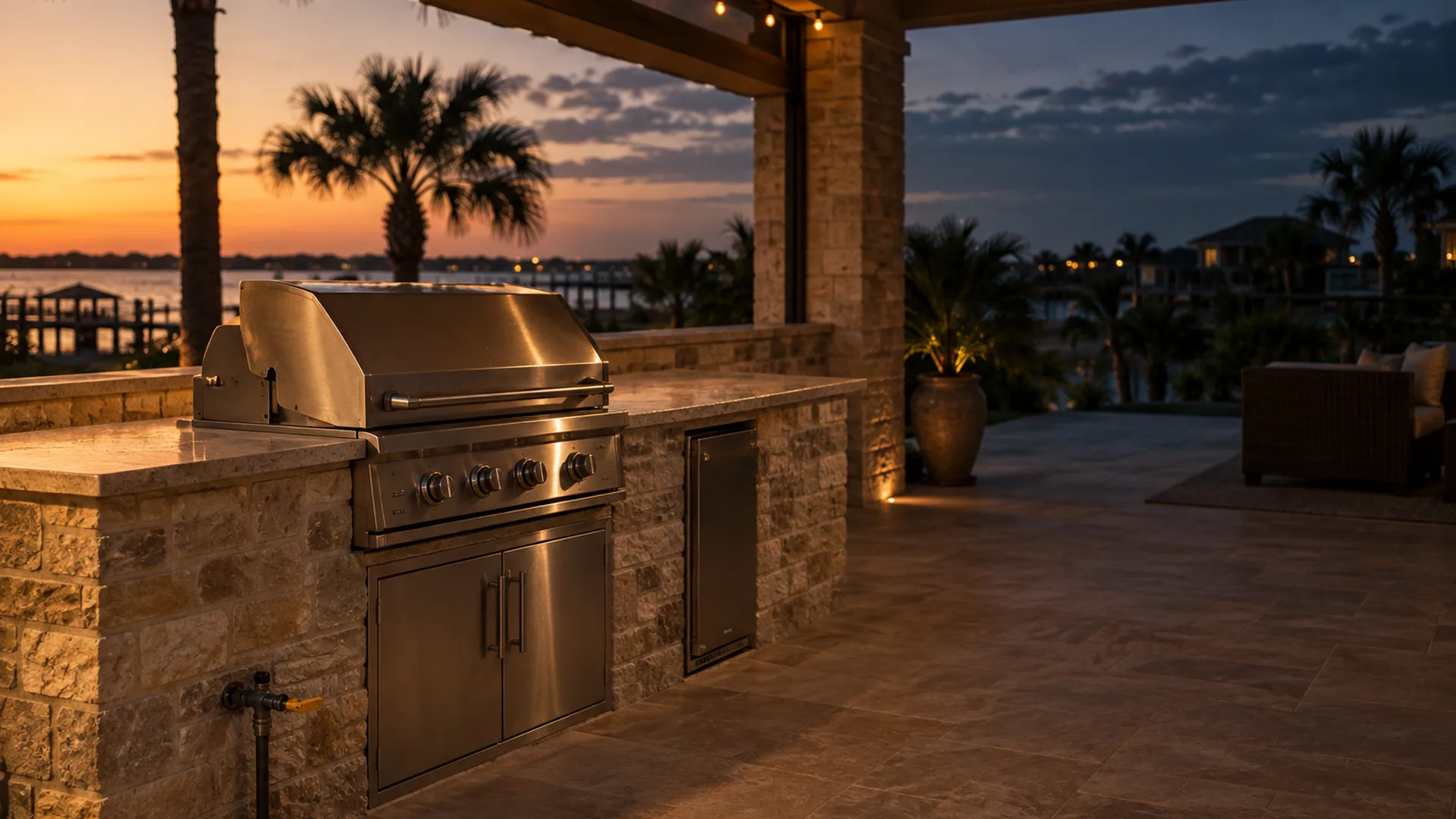
Permanent lines for built-in grills, outdoor kitchens, fire pits, and patio heaters. No more swapping propane tanks — and a genuine value-add on a Coastal Bend home.
Repairs & Leak Fixes
Locating and repairing failing lines, fittings, and shutoffs, then pressure-testing the whole system rather than just the section we touched.
How It Works
Four Steps
In-Person Estimate
Juan looks at the meter, the route, and the appliance, calculates the load and the developed length, and gives you a firm written price. About an hour, free, seven days a week.
Permit Pulled
Filed with the City of Corpus Christi before work starts. This is part of the job, not an extra.
We Run It
Correctly sized pipe, properly made joints, secured and protected where it passes through structure, with striker plates where they're required — then pressure-tested and held.
Inspected & Connected
City inspection, appliance connected and checked for proper operation, and a system you don't have to think about again.
Planning an Outdoor Kitchen
Do the Gas Line Before the Stone Goes Up
This is the most common gas job we take, and the most common mistake people make with it is sequencing.
The line has to be run, pressure-tested, and inspected before the counter is framed and faced. Once the stone or stucco is on, getting a line into that cabinet means opening finished work. We've been called out to do exactly that, and it costs several times what it would have cost to run it first.
Three things worth deciding early:What's going in the counter, eventually. A grill is one BTU load. A grill plus a side burner plus a future pizza oven is another. It costs very little to size the line for what you might add later and a great deal to upsize it afterward.
Where the shutoff goes. It needs to be accessible, which means not buried behind a stone face with no access panel.
How far it is from the meter. Outdoor kitchens tend to be at the back of the property, and the developed length from the meter is usually the single biggest driver of the cost. Longer runs need larger pipe to hold pressure at the appliance.
Get those three settled at the estimate and the rest is straightforward.
What It Costs
Three Things Set the Number
Distance from the meter
Developed length — the actual run plus the equivalent length of every fitting — drives material and labor more than any other single factor, and it also drives pipe size.
What it has to get through
A run through an open attic or crawlspace is straightforward. Through finished walls, under a slab, or across a two-story house is not.
The appliance load
A single grill line and a whole-house electric-to-gas conversion require different pipe sizing and different work at the meter.
There is no project minimum on gas line work. And because the same crew does drywall, tile, and paint, any wall we open gets closed back up finished — textured and painted to match — not left as a patch for you to deal with.
Black Iron vs. CSST
Two Materials, Two Right Answers
| Black Iron Pipe | CSST (Flexible) | |
|---|---|---|
| What it is | Rigid threaded steel, cut and threaded on site | Corrugated stainless tubing in a yellow or black jacket |
| Best for | Short, straight, exposed runs. Exterior runs. Anywhere it may take physical impact | Long runs through finished walls, attics, and around obstacles |
| Install | Slower — every joint is cut, threaded, and sealed | Faster — fewer joints, bends around framing |
| Wall thickness | Thick, takes abuse | Thin — needs striker plates where it passes through framing |
| Bonding | Bonded as part of normal grounding | Requires specific bonding to the electrical ground |
| Corrosion on the coast | Needs coating or paint where exposed outdoors | Jacketed, but fittings still need protection |
How we decide: exposed exterior runs and anything in a garage where a ladder or a bike could hit it gets black iron. Long concealed runs through finished space get CSST, bonded and plated properly. Most jobs of any size end up using both.
Gas Line Questions
Answers Before You Call
It comes down to the developed length from the meter, what the line has to pass through, and the BTU load of the appliance. A short run to a range in an accessible wall sits at the low end. A long run to an outdoor kitchen across a finished two-story house sits at the high end. Juan gives you a firm written price at the estimate rather than a phone guess, and there's no project minimum on gas work.
Yes, in effectively every case within Corpus Christi city limits. MLA pulls the permit and schedules the inspection as part of the job. This is not the place to save a few hundred dollars — unpermitted gas work is a real liability at resale, and an insurance carrier that discovers unpermitted gas work after an incident is not a conversation you want to have.
It's some of our most common gas work. A permanent line to a built-in grill, outdoor kitchen, fire pit, or patio heater means you never swap a propane tank again, and on a Coastal Bend home with real outdoor living space it adds usable value. One piece of advice: run the line before the counter is framed and faced. Retrofitting gas into a finished stone counter costs several times what it costs to do it in the right order.
Yes, provided gas service is available at the house. We run and size the line, install the shutoff, and connect the range. And because MLA is a remodeling crew, we also handle the cabinet modification and the backsplash or flooring repair a conversion usually requires — instead of leaving you separate contractors to line up.
Natural gas is odorless on its own, so utilities add an odorant that smells like rotten eggs or sulfur. Other signs: a hissing sound near a line, appliance, or meter; dead or dying grass in a line across the yard where a buried line runs; and an unexplained jump in your gas bill. If you smell gas, leave the house before doing anything else — don't flip switches or use your phone inside — then call the utility from outside, then call us.
CSST is corrugated stainless steel tubing — the flexible yellow or black jacketed gas line used in a lot of modern work. It installs faster than rigid black iron and it's fully code-compliant, but it has a thin wall and must be electrically bonded to the home's grounding system. Unbonded CSST has been implicated in lightning-related failures, which on this coast is a practical consideration rather than a theoretical one. We bond it, and the inspector verifies it.
Frequently, yes, and it's a common miss. Tankless units draw dramatically more BTU than the tank they replaced — often several times as much — and a line sized for the old tank simply cannot deliver it. The symptom looks like a bad water heater: it fires, then can't hold temperature under demand. Before replacing the unit, it's worth having the gas supply checked.
Most residential runs are a one-day job plus the inspection. Longer or more complicated runs — through finished walls, under a slab, or across a large footprint — can take two. You get the timeline with the written price.
Yes. Restaurant buildouts and tenant finish-outs regularly need gas sized for a cooking line and for water heating, and that's part of what we handle on commercial work.
[Confirm with Juan — warranty terms to be stated here.]
Reviewed by Real Homeowners
What People Say
“Job done at short notice, quickly and efficiently. Great work, great customer service. Highly recommend!!”
HomeAdvisor · Sep 2025
“I am extremely happy with the work done by MLA Contracting. They did an excellent job and I will be working with them again.”
HomeAdvisor · Aug 2025
“Juan was great...if he said he was coming: he arrived & on time.”
HomeAdvisor · Mar 2022
Related Services
Related Services
Local Service Areas
Where We Provide This Service
MLA Contracting delivers this service across Corpus Christi and surrounding Coastal Bend communities.

Free in-person estimate
Need a Gas Line Run? Let's Talk.
Call or text Juan at (361) 244-6440. Free estimate, seven days a week, 8am to 7pm. Permitted, pressure-tested, and inspected — every time.
No minimum on plumbing service calls.