
Slab Leak Repair · Corpus Christi
Slab LeakRepair inCorpus Christi
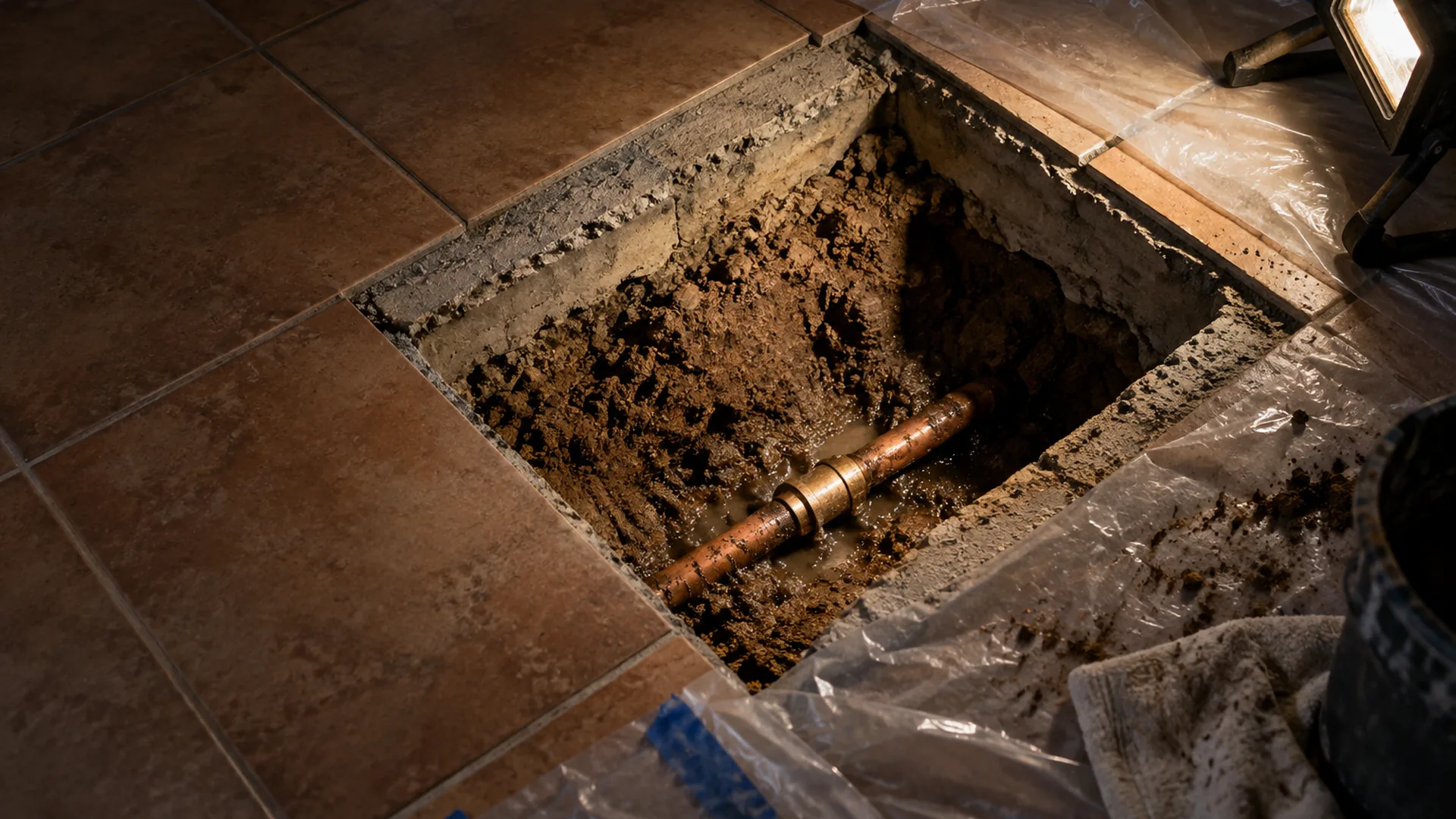
We locate it, cut the slab, fix the line, and put the floor back — concrete, tile, grout, and trim. Most plumbers hand you a bare patch and a second contractor to find.
- Licensed & Insured
- Permitted & Inspected
- Se Habla Español
- 7 Days a Week
It doesn't get better on its own
A Slab Leak Is a Foundation Problem Waiting to Happen
Water running under a concrete foundation does damage you can't see until it's expensive.
It saturates the soil beneath the slab. In Corpus Christi's expansive clay, wet soil swells and dry soil shrinks — and a slab leak creates a permanently saturated zone right next to soil that's still drying and contracting with the seasons. That differential is what moves a foundation. Movement shows up first as hairline cracks in the slab, then cracks in drywall and above door frames, then doors and windows that stop closing the way they used to.
Meanwhile the meter runs twenty-four hours a day. If it's on the hot side, the water heater runs with it, and you're paying to heat water that's going straight into the ground.
Hot lines fail first, and there's a reason.
Heat accelerates the expansion, contraction, and corrosion cycling that eventually breaches a copper line under a slab, which is why the majority of residential slab leaks are on the hot-water side. It's also why a warm or hot spot on the floor is one of the most reliable symptoms there is.
Catching it early is the difference between a plumbing repair and a plumbing repair plus flooring plus drywall plus, sometimes, a foundation engineer.
Don't Wait
Six Things Worth Paying Attention To
If two or more of these sound familiar, call before it spreads.
The test you can run in five minutes
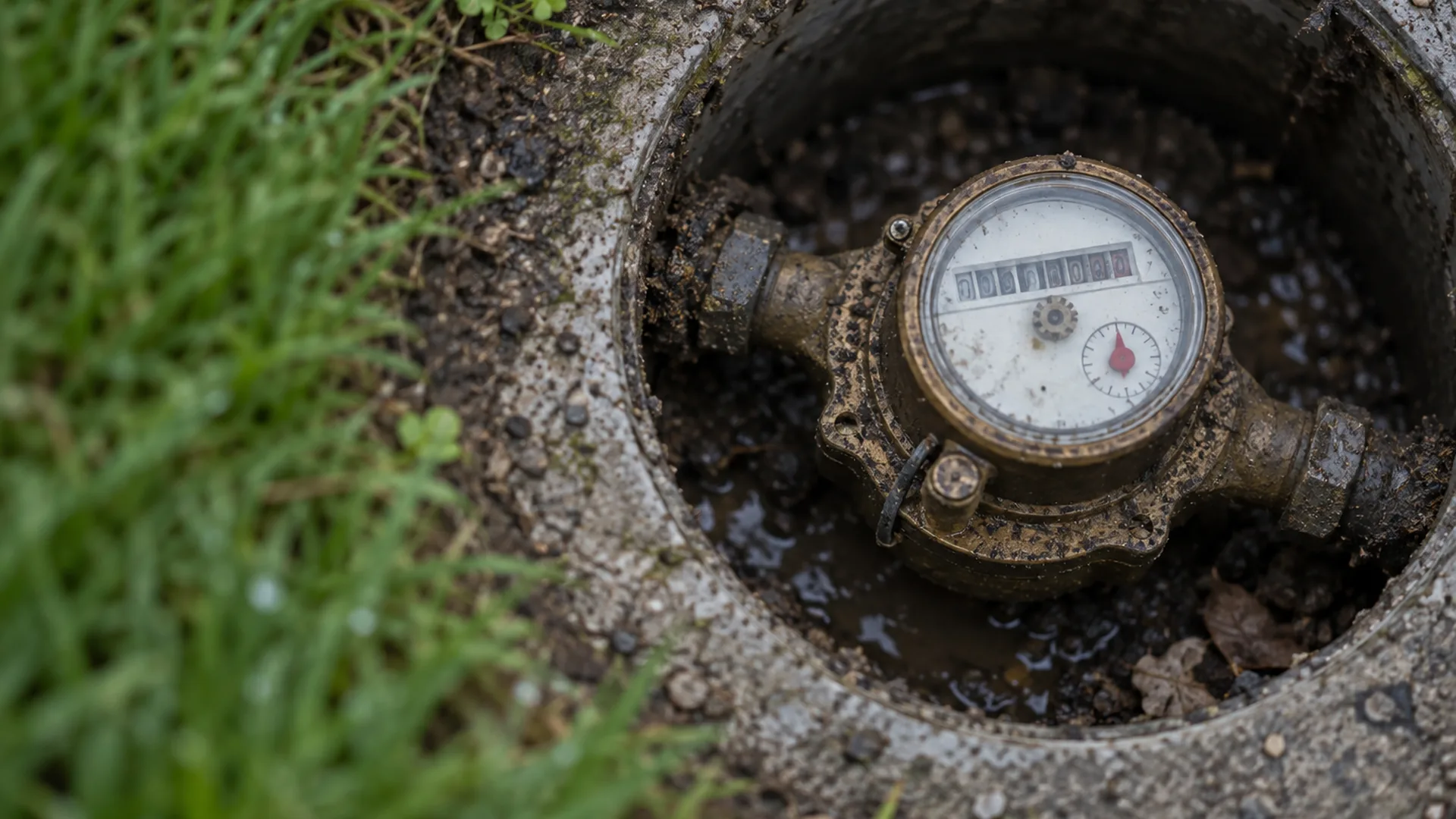
Turn off every faucet, appliance, ice maker, and irrigation zone in the house. Then go look at your water meter — it's usually in an in-ground box near the street.
Most meters have a small triangular or star-shaped low-flow indicator that spins on very small flows, plus the main register. If that indicator is moving, or the register creeps up over fifteen minutes with everything off, water is leaving the system somewhere.
That doesn't prove it's under the slab — it could be an irrigation line, a hose bib, or a toilet flapper. But it does prove you have a leak, and it's worth a call the same day.
Any two of the symptoms above together is worth a phone call. Finding a slab leak early is a plumbing job. Finding it late is a much larger one.
The Difference That Matters
Most Plumbers Stop at the Concrete Patch
Here's how a typical slab leak repair in Corpus Christi goes.
A plumber comes out, locates the line, breaks up your tile floor to reach it, repairs the pipe, pours concrete back into the hole, and leaves.
Now you have a working pipe and a rough grey concrete square in the middle of your kitchen. And you're calling around trying to find a tile setter who'll take a two-square-foot patch — which most of them won't, because it's an hour of work and a half day of scheduling. Meanwhile you're living around a hole in your floor, and if your tile was discontinued, you're also learning what "no longer available" means.
MLA doesn't hand that back to you. The same crew that cuts the slab re-lays the tile, matches the grout, and puts the room back together — flooring, baseboard, drywall, and paint.
It's normal work for us because MLA is a remodeling crew that also does licensed plumbing, not the other way around. Tile is what this crew is best known for.
One job. One crew. One invoice. A finished floor.

How We Find It
We Locate Before We Cut
Opening a slab in the wrong place costs you twice — once for the concrete and once for the floor on top of it. So detection comes first.
Isolate the system. Before anything else, we determine whether the leak is on the pressurized supply side or in the drain lines, and whether it's hot or cold. Shutting off the water heater's cold inlet and re-checking the meter tells us a great deal in a few minutes, and narrows the search dramatically.
Pressure testing. Isolating sections of the supply system and pressurizing them identifies which run is losing pressure, rather than guessing from where the symptom appears. Water travels under a slab — the wet spot is often not above the break.
Acoustic listening. Pressurized water escaping through a small breach makes a distinctive sound that carries through concrete. Listening equipment across a grid narrows the position considerably.
Thermal. On hot-side leaks, heated water warms the slab above it, and that pattern is readable — which is the same physics behind the warm spot you may have already felt with your feet.
The goal of all of it is the same: open the smallest area that gets us to the line, and leave the rest of your floor alone.
What's Included
Start to Finished Floor
Leak Detection
Locating the line before we cut anything, so we open the smallest area the repair allows instead of guessing and chasing.
Clean Concrete Cutting
Cut with the right equipment, not broken up blind. Less damage going in means less to put back.
The Repair
Water or drain line repaired to code and pressure-tested before anything gets closed up.
Reroute When It Makes Sense
Sometimes abandoning a failing line and running new through the wall or attic is smarter and cheaper than repairing in place and coming back in a year. We'll tell you which situation you're in.
Concrete Patched Correctly
Properly prepped, poured, and finished flat — so the floor going back on top sits right.
Floor Restored
Tile re-laid, grout matched, baseboard reset, paint touched in. The part nobody else includes.
How It Works
Four Steps
You Call
Tell Juan what you're seeing. Slab leaks don't go on a waiting list.
We Locate It
We find the actual line before opening anything.
We Repair It
Cut, repair or reroute, pressure-test, and patch. Permitted and inspected where the city requires it.
We Put It Back
Floor, grout, trim, paint. You get your room back, not a patch.
What It Costs
Every Slab Leak Is Different — Here's What Moves the Number
Where the line runs
A leak near an exterior wall is straightforward access. One under the center of the house, beneath a cabinet run, or under a kitchen island is considerably more involved.
Repair versus reroute
See the comparison above — the right call depends on the condition of the rest of the system, not just this one failure.
What's on top of it
Tile, hardwood, and polished concrete each restore differently, and that restoration is real work. It's also the part other plumbers don't quote, because they don't do it. If your tile is discontinued, sourcing a match is part of the conversation.
There is no project minimum on slab leak work. Juan gives you the number before the concrete gets cut.
Repair or Reroute
Two Real Options, and an Honest Recommendation
| Spot Repair | Reroute | |
|---|---|---|
| What it is | Open the slab, repair the failed section, close it | Abandon the under-slab run, pull new line through wall or attic |
| Best when | One isolated failure, rest of the system sound | System has already leaked before, or pipe shows widespread corrosion |
| Floor impact | One opening | Usually none in the floor; some wall and ceiling work instead |
| Cost | Lower up front | Higher up front |
| Future | The rest of that line is the same age | That run is off the table permanently |
The honest read: a single failure on an otherwise healthy system is worth repairing in place. But if the house has leaked before, or the pipe is visibly pitted where we open it, repairing is often the more expensive choice over five years — you pay for the concrete, the floor, and the disruption every time. Juan gives you both numbers and a straight recommendation. Some houses genuinely need a spot repair and nothing more.
Slab Leak Questions
Answers Before You Call
The most common are a sudden jump in your water bill, a warm or hot spot on the floor, the sound of running water when every fixture is off, unexplained damp or buckling flooring, water pressure that dropped gradually, and new cracks in floors or walls. You can check quickly yourself: shut off everything that uses water, including the ice maker and irrigation, then watch the water meter for fifteen minutes. If the low-flow indicator is spinning or the register creeps up, water is escaping somewhere in the system.
It depends on where the line runs, whether it's repaired in place or rerouted, and what flooring has to come up and go back down. We give you a firm number after we locate it — a phone estimate on a slab leak is a guess, and guesses on this work are always low. There's no project minimum on slab leak repair.
We cut the smallest opening the repair allows, and then we re-lay the tile and match the grout when we're done. That's what makes MLA different from a straight plumbing outfit — we're a remodeling crew that also does plumbing, so restoring the floor is ordinary work for us rather than somebody else's problem after we leave.
Policies vary and you should call your carrier early, but the common pattern is this: insurance often covers the resulting water damage and the cost of accessing the line — the concrete cutting and patching — while excluding the pipe repair itself, on the reasoning that the pipe failed from wear rather than a covered peril. Document everything with photos before anything is touched, get the claim opened before work starts, and we'll provide whatever written scope, photos, and documentation your adjuster asks for.
It comes down to the age and condition of the rest of the system. A single failure on a line that's otherwise sound is worth repairing in place. If the system has already leaked once, or the pipe shows widespread pitting where we open it, rerouting — abandoning the under-slab run and pulling new line through the wall or attic — often costs less over time than repairing the same failing system three times in five years. We'll give you both options and an honest opinion about which one your house needs.
Most spot repairs are one to two days for the plumbing itself. Concrete needs cure time before flooring goes back on top of it, so the full restoration usually adds a few days beyond that. A reroute avoids the concrete entirely and can sometimes be faster overall. You get a realistic timeline once we've located the leak.
Slab leaks get priority scheduling. Call or text (361) 244-6440 and Juan will find the soonest time, seven days a week, 8am to 7pm.
Under-slab plumbing work generally requires a permit and inspection in Corpus Christi. MLA is licensed, pulls the permit, and gets it inspected — which also puts the repair on the record. That matters if you sell the house, and it matters if you ever file a claim.
Heat drives the expansion, contraction, and corrosion cycling that eventually breaches a copper line, so hot-side failures are considerably more common in slab plumbing. It's also why a warm spot on the floor is such a reliable indicator — you're feeling heated water in the soil directly beneath the concrete.
It can, and that's the real reason not to wait. Corpus Christi sits on expansive clay that swells when wet and shrinks when dry. A leak creates a permanently saturated area under part of the slab while the rest of the soil keeps cycling with the weather. That uneven movement is what produces slab cracks, drywall cracks, and doors that stop latching. Fixing the leak early usually prevents all of it.
Reviewed by Real Homeowners
What People Say
“Job done at short notice, quickly and efficiently. Great work, great customer service. Highly recommend!!”
HomeAdvisor · Sep 2025
“I am extremely happy with the work done by MLA Contracting. They did an excellent job and I will be working with them again.”
HomeAdvisor · Aug 2025
“Juan was great...if he said he was coming: he arrived & on time.”
HomeAdvisor · Mar 2022
Related Services
Related Services
Local Service Areas
Where We Provide This Service
MLA Contracting delivers this service across Corpus Christi and surrounding Coastal Bend communities.

Priority scheduling, seven days a week
Think You Have a Slab Leak? Call Now.
Every day a slab leak runs is more water in the soil under your foundation. Call or text (361) 244-6440 and Juan will get the crew out.
No minimum on plumbing service calls.